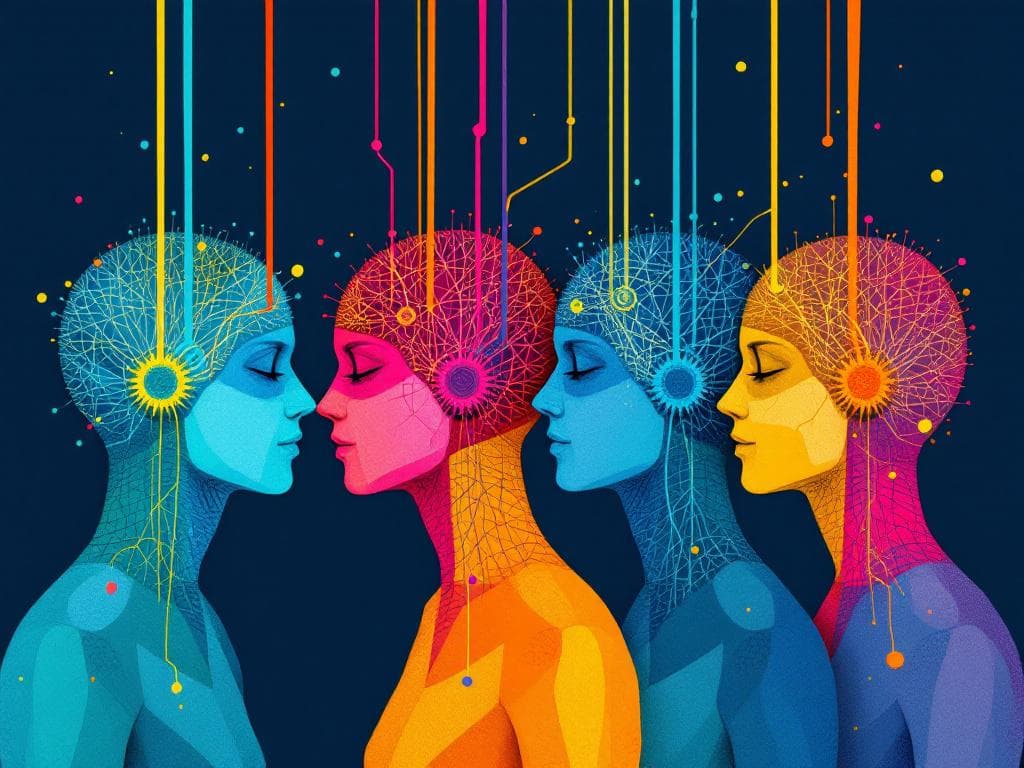

Codependency in relationships is one of the most misunderstood patterns in modern dating. It is often confused with being devoted or caring deeply, but codependency is something fundamentally different. It is a compulsive need to be needed — a pattern where your sense of identity, self-worth, and emotional stability depends entirely on your partner. You do not just love them; you disappear into them, abandoning your own needs, desires, and boundaries in the process.
Common signs of codependency include difficulty making decisions without your partner input, feeling responsible for their emotions and behavior, tolerating mistreatment because you fear abandonment, neglecting your own friendships and interests, and feeling anxious or empty when you are not in their presence. You might also notice that you attract partners who need rescuing — people with addiction, emotional instability, or chronic crises that give you a sense of purpose.
Codependency often originates in childhood homes where a child#
Codependency often originates in childhood homes where a child learned that love was conditional upon caretaking. Perhaps you grew up with an addicted parent and became the family peacekeeper. Perhaps emotional needs were ignored unless you were solving someone else problem. You learned that your value lies in what you do for others, not in who you are. This belief follows you into adult relationships, where you recreate the same dynamic with romantic partners.
Breaking free from codependency starts with radical self-awareness. Begin noticing when you sacrifice your own needs to avoid conflict or keep the peace. Notice when you say yes while your body screams no. Notice when you check your partner mood before deciding how to feel about your own day. These moments of awareness, though uncomfortable, are the cracks through which genuine change enters.
Develop a relationship with yourself. This might sound abstract, but it is profoundly practical. What are your hobbies outside the relationship? What are your opinions, separate from your partner? What brings you joy when nobody is watching? If you cannot answer these questions, that is not a failure — it is an invitation to begin exploring. Start small: eat at a restaurant alone, take a class that interests only you, spend a weekend without contacting your partner.
Healthy love is two complete people choosing to share their lives,#
Healthy love is two complete people choosing to share their lives, not two halves desperately clinging together to feel whole. You can love deeply, care generously, and support your partner wholeheartedly without erasing yourself in the process. The key difference is choice versus compulsion. When you give from a full cup rather than an empty one, your love becomes a gift rather than a transaction — and that is the kind of love that actually lasts.
Ready to Find Your Perfect Match?
Take our quick quiz to get personalized dating app recommendations.
Find My App →- Pew Research Center (2025) — Online dating attitudes and usage
- App Store & Google Play (2026) — Official ratings and download data
- MeetVibe editorial research (2026) — Hands-on testing and analysis
Editorial disclaimer: MeetVibe may earn a commission from partner links. This does not influence our ratings.