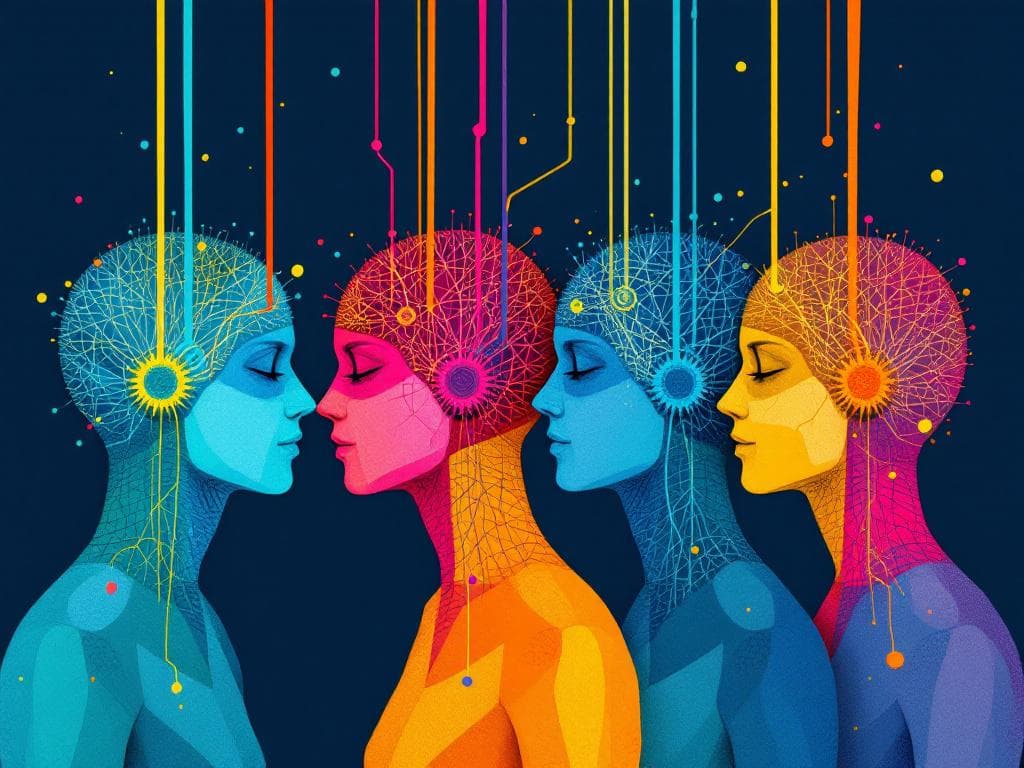

Ask most people what makes relationships work, and they will mention compatibility, attraction, or shared values. These matter, but decades of relationship research point to a less glamorous superpower: emotional intelligence. Emotional intelligence in relationships — the ability to recognize, understand, and manage emotions in yourself and others — is the strongest predictor of long-term relationship satisfaction, surpassing income, education, and even physical attraction.
Emotional intelligence has four core components. Self-awareness means recognizing your emotional state in real time — knowing when you are angry versus hurt, anxious versus excited. Self-regulation means managing those emotions constructively rather than reacting impulsively. Social awareness means reading your partner emotional cues accurately — their tone, body language, and unspoken needs. Relationship management means using all of this awareness to communicate effectively and resolve conflicts with care.
In practical dating terms, emotional intelligence looks like this:#
In practical dating terms, emotional intelligence looks like this: you notice that your date seems quieter than usual and gently ask if everything is okay, rather than assuming they are bored. You feel a flash of jealousy when they mention an ex and take a breath before responding, rather than making a sarcastic comment. You recognize when a conversation is escalating and suggest a pause, rather than saying something you will regret.
The good news is that unlike IQ, emotional intelligence can be developed at any age. Start by expanding your emotional vocabulary. Most people toggle between "fine," "stressed," and "angry." In reality, human emotions are far more nuanced. Are you frustrated, disappointed, overwhelmed, or resentful? Each of these requires a different response. The more precisely you can name what you feel, the more effectively you can communicate it to a partner.
Practice empathetic listening. When your partner shares something, resist the urge to immediately fix, advise, or relate it to your own experience. Instead, reflect what you hear: "It sounds like that situation made you feel unappreciated." This simple technique, drawn from clinical psychology, makes people feel profoundly understood. Most relationship conflicts are not about the surface issue — they are about feeling unseen. Empathetic listening addresses the root cause.
Develop a repair toolkit for inevitable conflicts#
Develop a repair toolkit for inevitable conflicts. Every couple fights — what matters is how quickly and gracefully you repair afterward. Emotionally intelligent partners take responsibility for their part in conflicts, apologize genuinely, and seek to understand before seeking to be understood. They do not keep score or bring up past mistakes during new disagreements. They treat each conflict as a shared problem to solve, not a battle to win.
Ready to Find Your Perfect Match?
Take our quick quiz to get personalized dating app recommendations.
Find My App →- Pew Research Center (2025) — Online dating attitudes and usage
- App Store & Google Play (2026) — Official ratings and download data
- MeetVibe editorial research (2026) — Hands-on testing and analysis
Editorial disclaimer: MeetVibe may earn a commission from partner links. This does not influence our ratings.