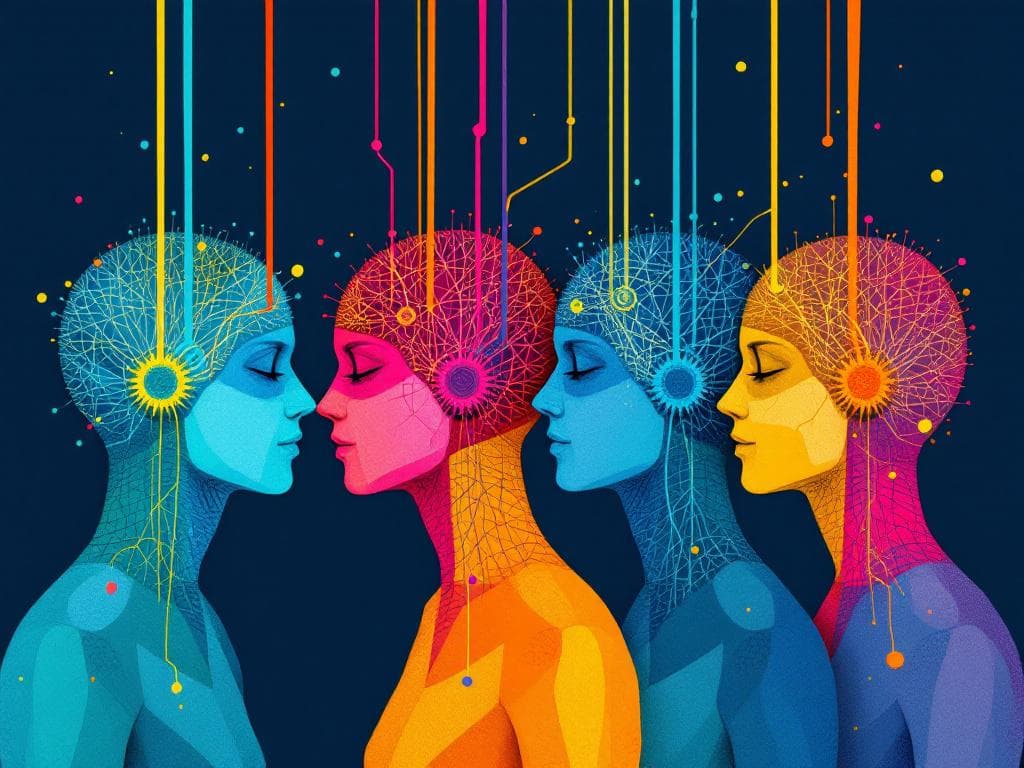

The most consequential decisions in your dating life were made before you were old enough to date. By the time you reached adolescence, your brain had already constructed a detailed template for what love looks, sounds, and feels like. This template was built from thousands of interactions with your primary caregivers during the first years of life. How they responded when you cried. Whether affection was freely given or earned through performance. Whether anger was expressed safely or explosively. Whether your emotional needs were met consistently, intermittently, or not at all. These experiences formed a blueprint that your adult romantic brain follows with astonishing fidelity.
The mechanism is called an internal working model in attachment theory. Your early experiences with caregivers taught your brain a set of beliefs about relationships: whether people can be trusted, whether your needs matter, whether love is conditional, and whether closeness is safe. These beliefs operate below conscious awareness, influencing who you are attracted to, how you behave in relationships, and what you tolerate from partners. You do not choose these beliefs. They were installed before you had the cognitive capacity to evaluate them. But they run your romantic life as surely as an operating system runs a computer.
Children who received consistent, warm, responsive caregiving develop#
Children who received consistent, warm, responsive caregiving develop secure attachment and carry into adulthood the belief that they are worthy of love and that others can be trusted to provide it. They navigate dating with relative ease, tolerate uncertainty without excessive anxiety, and form stable partnerships. This is the minority. The majority of adults carry some degree of insecure attachment, either anxious, avoidant, or a combination, each of which creates specific and predictable problems in dating.
The child who learned that love is conditional, available only when performing well, being quiet, or meeting parental expectations, becomes the adult who performs in relationships. They monitor their partner reactions constantly, adjust their behavior to maintain approval, and experience authentic self-expression as dangerous. In dating, they are the person who molds themselves to fit each new partner, losing a bit more of their identity with each relationship. They do not know who they are outside of a relational context because they were never allowed to find out.
The child who learned that expressing needs leads to punishment or abandonment becomes the adult who cannot ask for what they want. They hint. They hope. They wait for their partner to intuit their needs without being told. And they feel chronically unsatisfied without understanding why. In dating, they are the person who says I am fine when they are not, who swallows frustration to keep the peace, and who ultimately leaves relationships that never had a chance to meet their needs because their needs were never communicated.
The child who experienced love as chaotic, explosive, or#
The child who experienced love as chaotic, explosive, or unpredictable becomes the adult who confuses intensity with intimacy. Stable, calm love registers as boring or suspicious because it does not match the template. They are drawn to dramatic relationships that re-create the emotional rollercoaster of childhood. They mistake jealousy for passion, fighting for connection, and reconciliation for intimacy. The high-conflict relationship feels normal because normal was redefined by childhood experience before they had the vocabulary to question it.
Awareness is the first step, but it is not the destination. Knowing that your childhood shaped your dating patterns does not automatically change those patterns. Change requires consistent, conscious intervention at the moment when old patterns activate. When you feel the pull toward a familiar but unhealthy dynamic, pause and name it. This is my template, not my truth. When you feel resistant to a partner who is offering something your childhood did not, stay curious instead of running. The discomfort you feel is not a warning. It is the growing pain of expanding beyond an old blueprint.
Therapy, particularly modalities focused on attachment and relational patterns like EMDR, IFS, or psychodynamic therapy, can accelerate the process of recognizing and revising childhood templates. But the most powerful laboratory for this work is the relationship itself. Every dating experience is an opportunity to notice when you are responding to the person in front of you versus the caregiver behind you. The moment you can distinguish between the two is the moment you begin to choose your relationships rather than repeat them.
Ready to Find Your Perfect Match?
Take our quick quiz to get personalized dating app recommendations.
Find My App →- Pew Research Center (2025) — Online dating attitudes and usage
- App Store & Google Play (2026) — Official ratings and download data
- MeetVibe editorial research (2026) — Hands-on testing and analysis
Editorial disclaimer: MeetVibe may earn a commission from partner links. This does not influence our ratings.