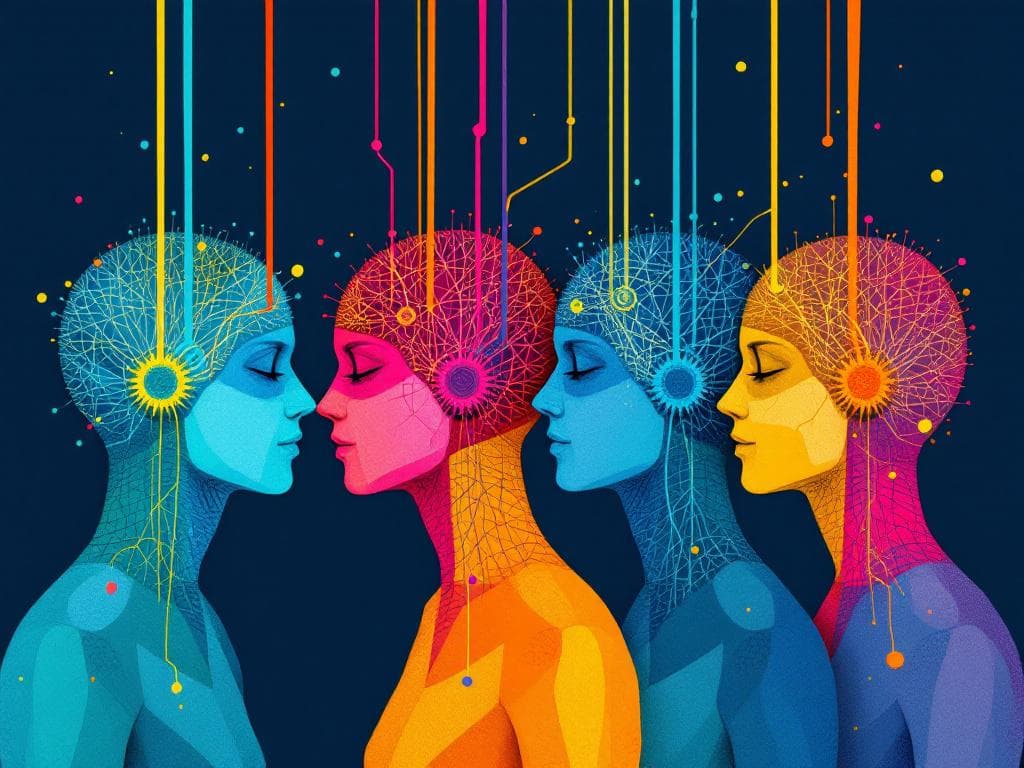

People pleasing in dating looks like generosity, attentiveness, and selflessness. It looks like always suggesting what the other person wants, never expressing preferences that might create conflict, and absorbing discomfort silently to keep the peace. From the outside, people pleasers appear to be ideal partners. From the inside, they are exhausted, resentful, and slowly disappearing. The core confusion of people pleasing is mistaking the absence of conflict for the presence of connection. They are not the same thing, and treating them as interchangeable is the fastest way to build a relationship that looks beautiful and feels hollow.
People pleasing is not a personality trait. It is a survival strategy developed in environments where expressing needs was punished, ignored, or met with withdrawal of love. Children who learned that their value was contingent on making others comfortable carry that program into adult relationships without realizing it. On dates, this manifests as hyper-attunement to the other person mood and preferences combined with complete suppression of their own. They are not being generous. They are being strategic, trading authenticity for safety, just as they learned to do as children.
The dating patterns of people pleasers are remarkably consistent#
The dating patterns of people pleasers are remarkably consistent. They attract confident, sometimes controlling partners who enjoy being the center of attention. They agree to activities they do not enjoy. They laugh at jokes they do not find funny. They suppress opinions that might create friction. They over-function in the relationship, planning, remembering, accommodating, while their partner under-functions. And they interpret the resulting imbalance as proof that they are not doing enough rather than evidence that the dynamic is fundamentally broken.
The resentment that builds inside a people pleaser is inevitable and corrosive. Every suppressed preference, every swallowed objection, every forced smile deposits a small amount of anger into an internal reservoir. Over weeks and months, this reservoir fills until it overflows in ways that seem disproportionate to the triggering event. The partner who has been receiving nothing but agreeability is blindsided by what appears to be sudden hostility. From the people pleaser perspective, the explosion represents months of accumulated frustration. From the partner perspective, it comes from nowhere.
Breaking the people-pleasing pattern in dating starts with the smallest possible acts of honest self-expression. Order what you actually want from the menu instead of whatever seems easiest. When asked where you want to go, name a real preference instead of saying I am fine with anything. When a date says something you disagree with, offer your actual perspective rather than nodding along. These micro-assertions will feel terrifyingly confrontational to a people pleaser. They are not. They are the minimum requirements for a genuine human interaction.
The fear underlying people pleasing is that your authentic self is#
The fear underlying people pleasing is that your authentic self is not enough to keep someone interested. If you express needs, they will leave. If you disagree, they will be angry. If you take up space, there will not be room for both of you. These beliefs feel like facts but they are hypotheses that have never been tested because you have never allowed a partner to see the real you. The only way to discover that your authentic self is enough is to show it and observe the response. Some people will leave. Those are not your people. Some will stay, and those connections will feel like nothing you have experienced before.
Kindness and people pleasing are not the same thing. Kindness comes from a place of fullness, choosing to be generous because you have enough internal resources to share. People pleasing comes from a place of deficit, performing generosity because you believe your value depends on it. Kind people set boundaries. People pleasers do not have boundaries to set. Kind people say no when they mean no. People pleasers say yes reflexively and resent it later. The goal is not to become less giving. It is to start giving from choice rather than compulsion.
Ready to Find Your Perfect Match?
Take our quick quiz to get personalized dating app recommendations.
Find My App →- Pew Research Center (2025) — Online dating attitudes and usage
- App Store & Google Play (2026) — Official ratings and download data
- MeetVibe editorial research (2026) — Hands-on testing and analysis
Editorial disclaimer: MeetVibe may earn a commission from partner links. This does not influence our ratings.