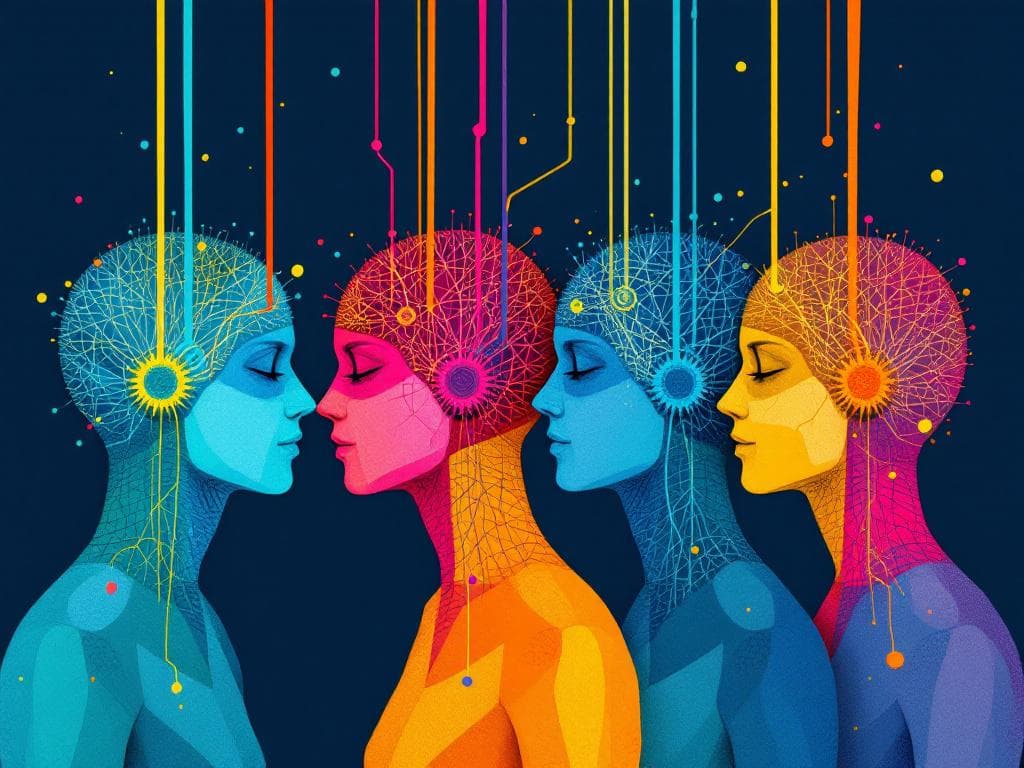

Chemistry is the most celebrated and least understood force in dating. That instant magnetic pull, the feeling that you have known someone forever after three hours, the electric charge that makes every other match feel flat by comparison. Dating culture treats intense chemistry as the ultimate signal that a relationship is meant to be. But neuroscience and psychology tell a more complicated story. Sometimes what feels like extraordinary chemistry is your nervous system recognizing a familiar pattern, not a compatible one but a familiar one. And familiar does not mean healthy.
Genuine chemistry and trauma-based attraction produce similar subjective experiences but have different neurological signatures. Genuine chemistry activates reward circuits gradually, building as mutual trust and understanding develop. It feels warm, expanding, and curious. Trauma-based attraction hijacks the stress response system, producing intense activation that mimics the fight-or-flight pattern. It feels urgent, consuming, and slightly desperate. The intensity of trauma-based attraction is often mistaken for depth, but intensity and depth are not the same thing. Intensity is a measure of nervous system activation. Depth is a measure of genuine understanding.
The psychology behind trauma-based attraction is rooted in repetition#
The psychology behind trauma-based attraction is rooted in repetition compulsion, the unconscious drive to recreate familiar emotional dynamics in an attempt to master them. If your earliest experiences of love involved unpredictability, conditional acceptance, or emotional volatility, your adult brain is drawn to partners who recreate those conditions. The recognition is not conscious. It happens at the level of the autonomic nervous system, which is why it feels so visceral and instinctive. You are not choosing these partners. Your nervous system is selecting them before your conscious mind gets involved.
The timeline of the relationship provides the clearest diagnostic signal. Genuine chemistry builds incrementally over weeks and months, deepening as you learn more about each other. Trauma-based attraction peaks early and declines in a sawtooth pattern of intense highs and devastating lows. If the first three dates felt like the most intense emotional experience of your life, that is a data point worth examining carefully. Not because it is necessarily problematic, but because that level of early intensity has a higher probability of being driven by pattern recognition than by genuine compatibility.
The stability test is another useful diagnostic. Genuine chemistry is enhanced by stability. The relationship feels better as it becomes more predictable and secure. Trauma-based attraction is enhanced by instability. The relationship loses its charge when things are calm and reignites when drama, distance, or uncertainty are introduced. If you find yourself bored by a partner who is consistent and electrified by a partner who is unpredictable, your nervous system may be confusing activation with attraction. This confusion is not a character flaw. It is a calibration issue inherited from your relationship history.
Breaking the pattern requires conscious override of automatic#
Breaking the pattern requires conscious override of automatic responses. When you feel overwhelming chemistry with someone, pause before interpreting it as destiny. Ask yourself whether this person resembles anyone from your past, not physically but in their emotional patterns. Ask whether the intensity you feel is accompanied by anxiety or by peace. Ask whether you feel genuinely safe or just intensely stimulated. These questions do not kill genuine chemistry. They protect you from the imitation that feels identical on the surface but leads to radically different destinations.
Choosing partners who do not trigger the familiar intense response feels like settling to a nervous system calibrated for chaos. It is not settling. It is graduating. The partners who feel boring at first are often the ones who have the capacity for the deep, sustained, growing love that the intense ones never could. Give the slow-burn connections more time than your instincts suggest they deserve. Three dates with someone who feels warm and safe may not produce the fireworks of one date with someone who feels electric and dangerous. But warmth builds houses. Lightning only strikes them.
Ready to Find Your Perfect Match?
Take our quick quiz to get personalized dating app recommendations.
Find My App →- Pew Research Center (2025) — Online dating attitudes and usage
- App Store & Google Play (2026) — Official ratings and download data
- MeetVibe editorial research (2026) — Hands-on testing and analysis
Editorial disclaimer: MeetVibe may earn a commission from partner links. This does not influence our ratings.