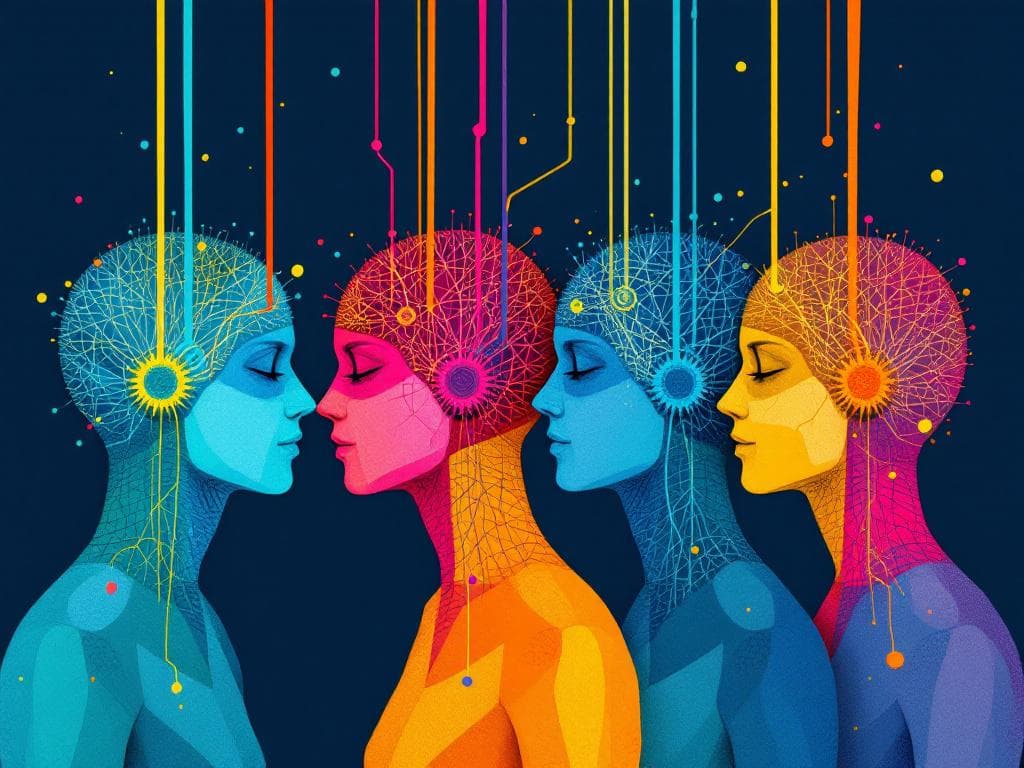

You have a type, and that type keeps breaking your heart. They are charming but distant. Passionate but inconsistent. Full of potential but allergic to follow-through. Every time you meet someone who is clearly available, who texts back promptly, who makes plans and keeps them, you feel a strange absence of chemistry. They are too nice. Too eager. Too easy. And so you drift back toward the person who keeps you guessing, who runs hot and cold, who gives you just enough to stay but never enough to feel secure. This is not a coincidence. It is a pattern, and it has a name.
Attachment theory explains the mechanics of this pattern with uncomfortable precision. If you developed an anxious attachment style in childhood, you learned that love requires effort, pursuit, and tolerance of inconsistency. Available people feel boring to your nervous system because their consistency does not activate the anxiety-excitement loop that your brain has been conditioned to interpret as chemistry. Unavailable people feel compelling because they recreate the familiar push-pull dynamic of your earliest relationships. You are not attracted to them despite their unavailability. You are attracted to them because of it.
The intermittent reinforcement principle from behavioral psychology#
The intermittent reinforcement principle from behavioral psychology adds another layer. When rewards come unpredictably, the brain becomes more obsessed with pursuing them than when rewards are consistent. This is why slot machines are addictive and salary payments are not. An emotionally unavailable partner functions like a human slot machine. Sometimes they are warm, attentive, and present. Sometimes they disappear, go cold, or prioritize everything else. The unpredictability keeps your dopamine system in overdrive, creating the sensation of intense attraction that is actually anxiety wearing chemistry as a costume.
The familiarity factor cannot be overstated. Human beings are wired to seek what they know, not what they need. If your formative experience of love involved chasing a parent emotional approval, earning attention through performance, or walking on eggshells around someone moods, then a relationship that requires the same skills feels like home. Home does not mean healthy. It means recognizable. An available, emotionally present partner feels foreign and therefore suspicious to a nervous system trained on scarcity. This is why the common advice to just pick someone nice misses the point entirely.
Breaking the pattern starts with recognizing that what you call chemistry is often just activated attachment anxiety. This does not mean you should date people you find physically unattractive or personally boring. It means you should question the narrative that real love requires suffering, uncertainty, or drama. Try an experiment: the next time you meet someone who seems great on paper but does not give you butterflies, give it three dates instead of one. Butterflies in the stomach and nausea use the same neural pathways. What you have been calling excitement might be fear.
Building attraction to availability is a gradual neurological#
Building attraction to availability is a gradual neurological process, not a switch you flip. Start by paying attention to how you feel in the presence of consistent people, even in non-romantic contexts. Notice the calm. Notice the absence of hypervigilance. Notice how you do not have to perform or strategize. That calm feeling is what secure attachment actually feels like. It will not be as intense as the anxious rollercoaster, especially at first. But intensity is not intimacy. Intensity is just your nervous system firing on all cylinders because it perceives a threat.
Therapy is the most efficient tool for rewiring attraction patterns because a skilled therapist can help you see the connection between past attachment wounds and present relationship choices in real time. EMDR, internal family systems, and attachment-focused therapies are particularly effective for this work. But self-awareness alone creates meaningful change. Start tracking your attraction patterns in a journal. Note when you feel most drawn to someone and what was happening in the interaction. You will start to see the correlation between their withdrawal and your pursuit, and that visibility is the beginning of the end of the pattern.
The uncomfortable truth is that you might need to tolerate a period of boredom as you transition from unavailable to available partners. Boredom is withdrawal from the intermittent reinforcement cycle, and like any withdrawal, it is temporary. On the other side of it is something you may have never experienced: a relationship where you feel wanted consistently, where your texts get answered, where plans are kept, and where love does not feel like a puzzle you need to solve. It will feel strange at first. Then it will feel peaceful. Then it will feel like something you cannot believe you ever lived without.
Ready to Find Your Perfect Match?
Take our quick quiz to get personalized dating app recommendations.
Find My App →- Pew Research Center (2025) — Online dating attitudes and usage
- App Store & Google Play (2026) — Official ratings and download data
- MeetVibe editorial research (2026) — Hands-on testing and analysis
Editorial disclaimer: MeetVibe may earn a commission from partner links. This does not influence our ratings.