
The most dangerous myth about toxic relationships is that they are easy to identify. They are not. Toxic relationships do not announce themselves with red flags and warning sirens. They begin with intensity that feels like passion, attention that feels like devotion, and closeness that feels like destiny. The transition from exciting to damaging happens so gradually that most people do not recognize it until they are deeply embedded. Understanding the subtle differences between healthy and toxic relationship patterns is not pessimism. It is the most important form of self-protection available to anyone who wants to love without losing themselves.
Difference one: healthy relationships add to your identity; toxic ones consume it. In a healthy relationship, you maintain your friendships, hobbies, and goals. Your partner encourages your growth even when it does not directly involve them. In a toxic relationship, your world slowly shrinks until the relationship is your only source of meaning, validation, and social connection. This happens through subtle discouragement of outside relationships, manufactured conflicts timed to coincide with your independent plans, and an unspoken expectation that the relationship should be sufficient for all emotional needs.
Difference two: conflict in healthy relationships leads to#
Difference two: conflict in healthy relationships leads to resolution; conflict in toxic relationships leads to repetition. Healthy couples argue about specific issues, listen to each other perspectives, and reach compromises that both partners can accept. The same argument does not recur endlessly because it actually gets addressed. Toxic couples have the same fight on a loop. The surface topic changes but the underlying dynamic remains identical: one person pursuing, the other withdrawing, and neither feeling heard. If you can predict exactly how every argument will unfold, that predictability is a symptom, not a feature.
Difference three: healthy relationships make you feel more like yourself; toxic ones make you feel like a stranger. Pay attention to how you behave around your partner. Are you funnier, kinder, more curious, more creative? Or are you more anxious, more careful with your words, more focused on managing their mood than expressing your own? Healthy love amplifies your best qualities. Toxic love suppresses them. If you find yourself editing your personality, monitoring your tone, or performing a version of yourself that would be unrecognizable to your closest friends, that is critical information.
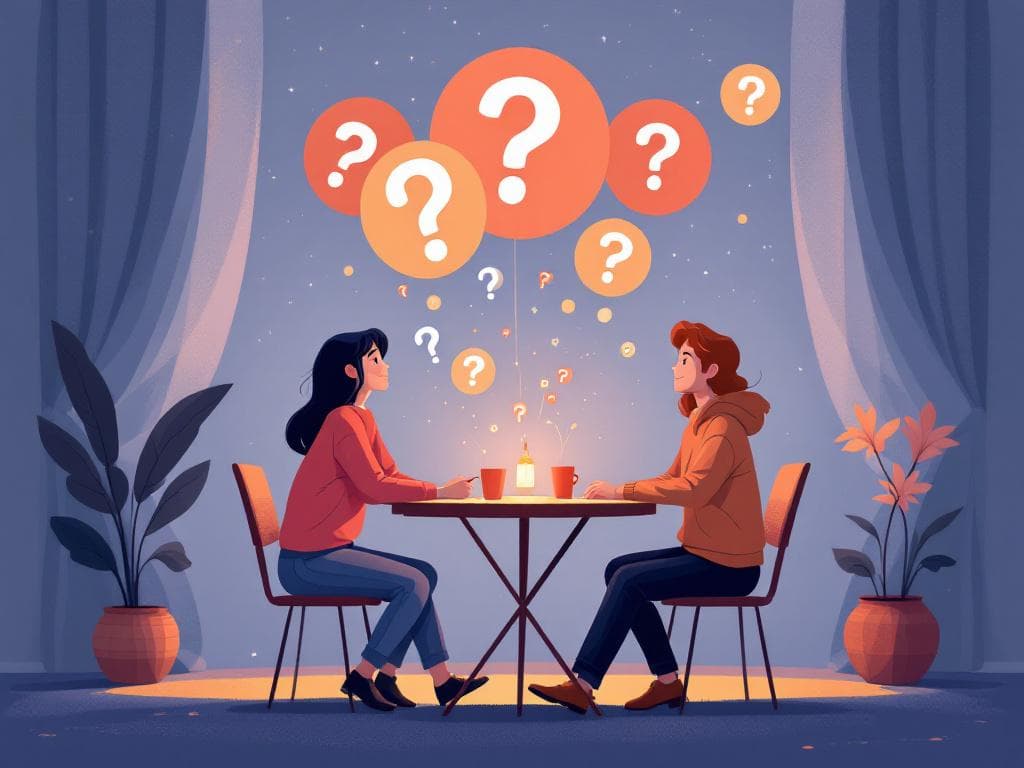
Differences four through seven involve communication. Healthy relationships feature curiosity about each other inner worlds, even after years together. Partners ask genuine questions and listen to the answers. Toxic relationships replace curiosity with assumption, projection, and mind-reading demands. Healthy couples can say I am hurt without it being received as an attack. Toxic couples cannot express negative emotions without triggering a defensive escalation. Healthy partners apologize specifically and change their behavior. Toxic partners apologize generally and repeat the behavior.
Differences eight through eleven involve power#
Differences eight through eleven involve power. Healthy relationships operate on roughly equal power, though the balance may shift depending on circumstances. When one partner is struggling, the other steps up without keeping score. Toxic relationships maintain a persistent power imbalance where one partner controls the emotional climate and the other adapts to survive it. Decision-making in healthy relationships involves genuine input from both people. In toxic ones, one person decides and the other either complies or faces consequences ranging from silent treatment to explosive anger.
Differences twelve through fourteen involve trust. Healthy trust is built through consistent, reliable behavior over time. It does not require surveillance, phone checks, or constant reassurance. Toxic trust is conditional and fragile, requiring ongoing proof that is never quite sufficient. Jealousy in healthy relationships is a brief, acknowledged feeling that is discussed and resolved. Jealousy in toxic relationships is a controlling force that restricts behavior, isolates partners from friends, and treats normal social interaction as betrayal.
The fifteenth and most important difference: healthy relationships are chosen freely every day; toxic relationships feel impossible to leave. If you stay because you genuinely want to, because your life is better with this person, because the relationship challenges you to grow in ways you value, that is health. If you stay because you are afraid of being alone, because the good moments are so good they make the bad moments seem worth enduring, because you have been convinced that no one else would want you, that is toxicity wearing the mask of love. The distinction is not always obvious from the inside, but it becomes crystal clear when you have the courage to ask yourself honestly: am I here by choice or by fear?
Ready to Find Your Perfect Match?
Take our quick quiz to get personalized dating app recommendations.
Find My App →- Pew Research Center (2025) — Online dating attitudes and usage
- App Store & Google Play (2026) — Official ratings and download data
- MeetVibe editorial research (2026) — Hands-on testing and analysis
Editorial disclaimer: MeetVibe may earn a commission from partner links. This does not influence our ratings.